
Reflections from week two
As I reflect on my recent experience in D.C., I feel that I am unable to speak about it without addressing the executive order released this past week, ironically titled “Restoring Truth and Sanity to American History.” The irony is especially stark as it targets the very museums we visited—institutions dedicated to truth-telling, inclusivity, and democracy.
My immediate thoughts turn to Timothy Anne Burnside, Ryan Dodge, Dennis Zotigh, Nathalie Ryan, and Shannon Baldioli—Smithsonian employees who generously shared their knowledge and experiences with our class. Their dedication underscores the critical role museums play as spaces for learning, dialogue, and reflection, committed to exploring history in all its complexities.
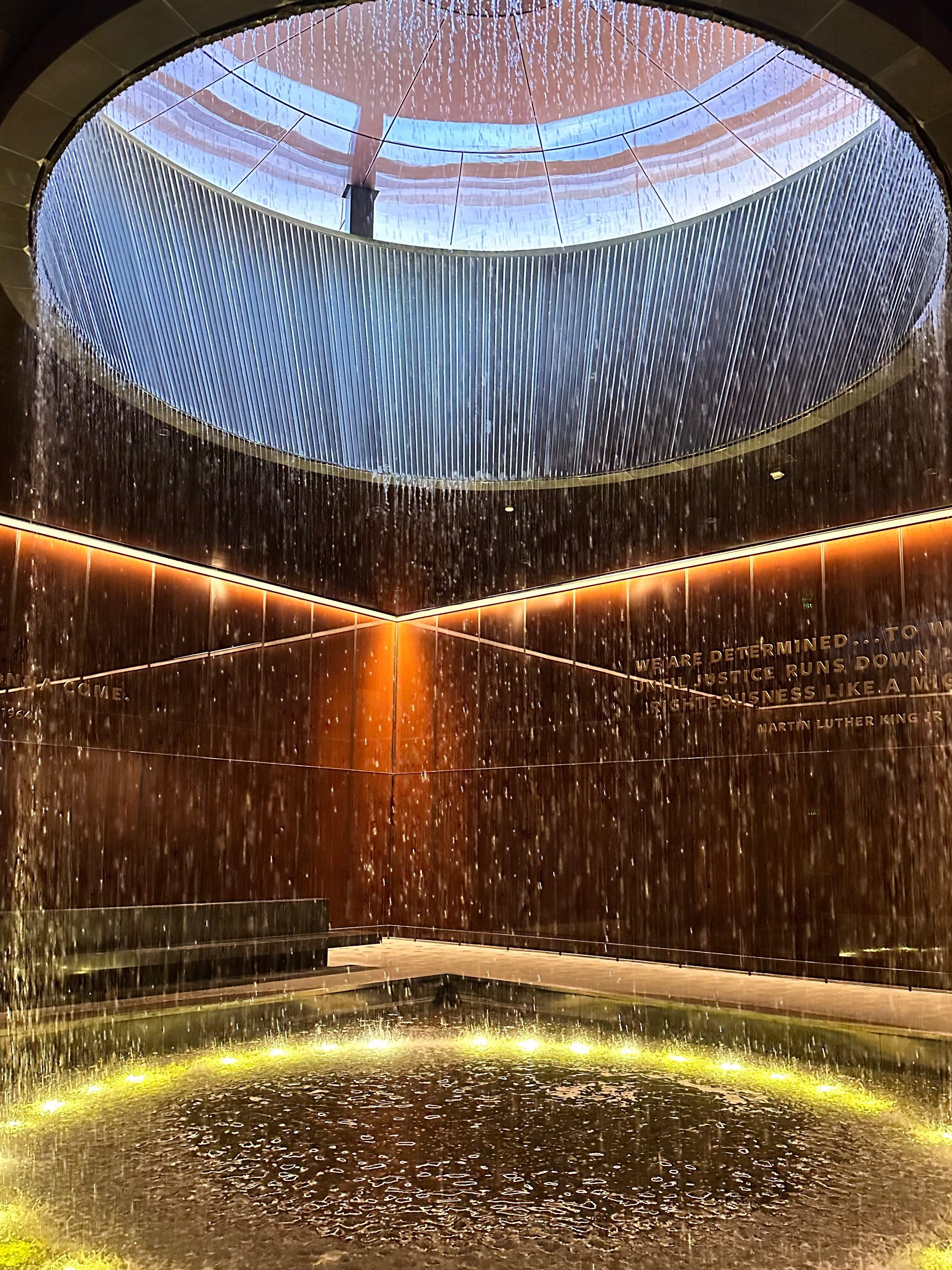
The Contemplative Court at the Smithsonian’s National Museum of African American History and Culture
A recurring theme during many of our visits was the power of advocacy and community-driven storytelling. Institutions representing marginalized communities carry a profound responsibility to listen to and amplify the voices of those they exist to serve. Yet, given that the museum industry remains overwhelmingly white, the question emerges: how can professionals authentically tell stories that are not their own? Past courses I have taken, such as Museums and Accessibility and Museums, Race, and Inclusion, emphasized the importance of directly engaging with communities, allowing their experiences and insights to lead the narrative.
In the same vein, Timothy Anne Burnside at the National Museum of African American History and Culture spoke about her intentional and collaborative approach to interpreting others’ lived experiences. Similarly, Ryan Dodge at the National Museum of the American Indian highlighted the value of digital storytelling to ensure widespread representation, reinforcing the importance of institutional support to amplify community voices. Phillips@theArc echoed these principles, stressing participation and partnership as essential.
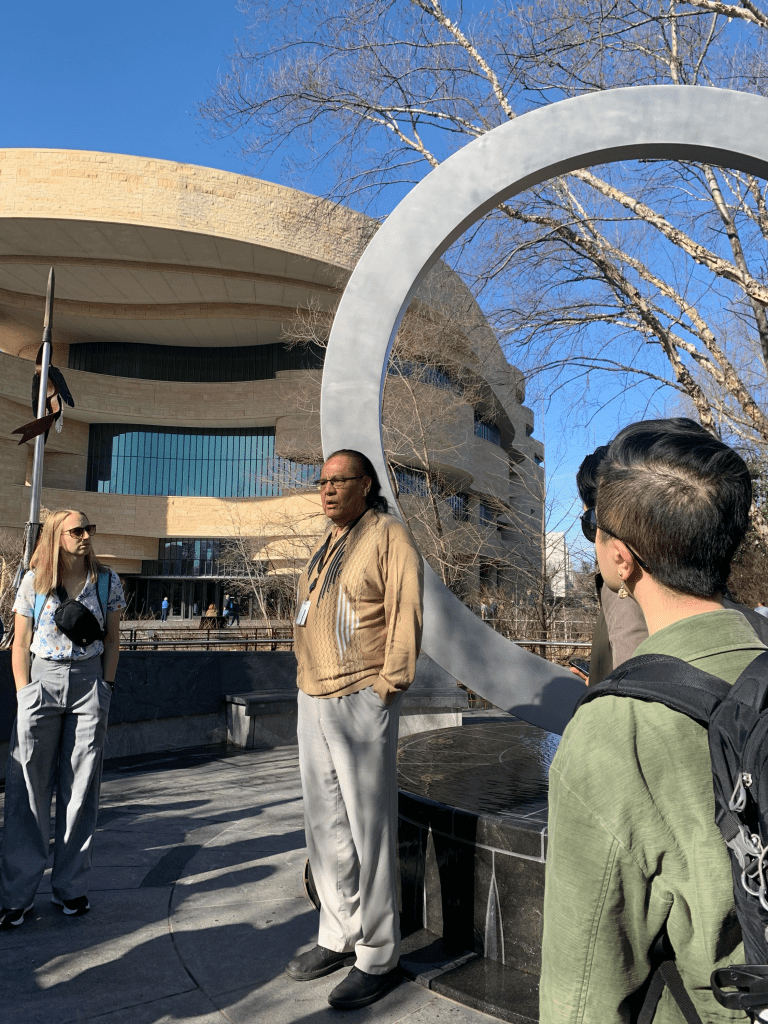
Dennis Zotigh sharing his lived experience to contextualize the museum
This collaborative spirit and commitment to diversity make the recent executive order even more devastating. Rather than empowering museums to fulfill their educational mission, the order imposes a restrictive framework designed to reinforce a sanitized narrative of American history. It directly contradicts the efforts museums worldwide are making to decolonize collections and interpretations of history. Decolonization actively addresses past injustices, diversifies perspectives, and meaningfully engages communities (Shoenberger, 2022). By limiting inclusive, critical examinations of history, this order undermines the core democratic values inherent in museum work.
In a JHU fireside chat, Smithsonian leaders Lonnie Bunch, Carla Hayden, and Colleen Shogan emphasized that highlighting historically marginalized stories is not merely an act of inclusion but a means to present a fuller, more accurate depiction of American history. Diverse narratives do not fragment American history; they complete and correct it.
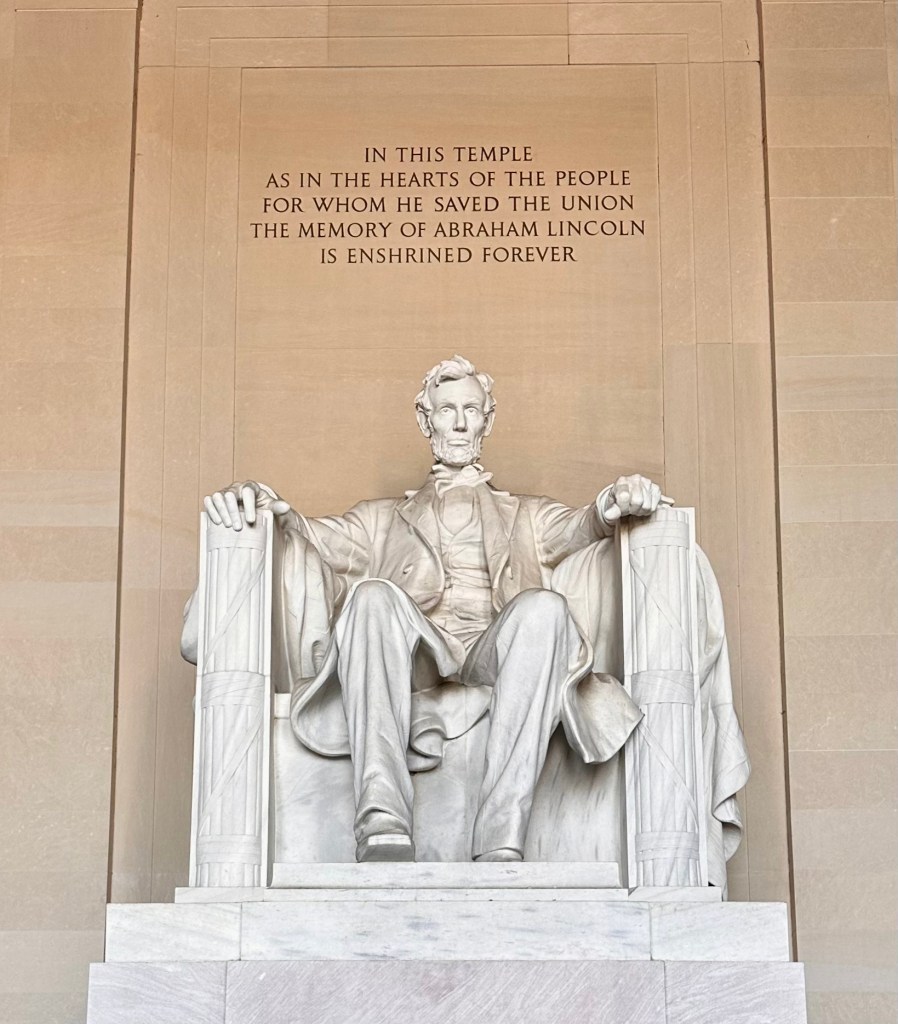
I visited the Lincoln Monument on my last day in D.C. In this moment the Union feels unstable.
In my last reflection, I considered the implications of our government attempting to enforce standards that contradict the International Council of Museum’s definition of a museum. This definition places diversity, access, and inclusion at the heart of museum work, enshrining these values into a universal professional standard. Smithsonian institutions are being placed in a devastating position, essentially blackmailed by the administration. Although the government does not have control over museum content, it can withdraw the funding museums rely upon for operational needs. This raises an important question: Where is the line we are unwilling to cross? Is remaining open but heavily censored preferable to being righteous yet shuttered? Just as the National Gallery preemptively adjusted its public relations approach, to what extent will other museums feel compelled to censor themselves for survival? I am left with more questions than answers.
This order directly opposes everything I have learned in this program, as well as my personal values as a museum professional. One of the goals of this reflection is to consider the influence of other classes in relation to the experience of the seminar. However, the only way we can enact the lessons learned in this program is if museums remain open and able to speak freely.
Due to this, my most vivid class memories are those focused on historic resistance. In History and Philosophy of Museums, I learned about the Euro-centric colonial roots of museums and the ongoing fight to decolonize collections. In Accessibility in Museums, I learned about the brave individuals who fought against discrimination through physical and attitudinal barriers, leading to the eventual passage of the Americans with Disabilities Act. In Race and Inclusion in Museums, I learned about the history of Black resistance and how to be an antiracist ally in both my personal and professional life. These lessons do not exist in a vacuum—they actively influence my choices and opinions in the field, providing critical context for understanding the gravity of the current climate.
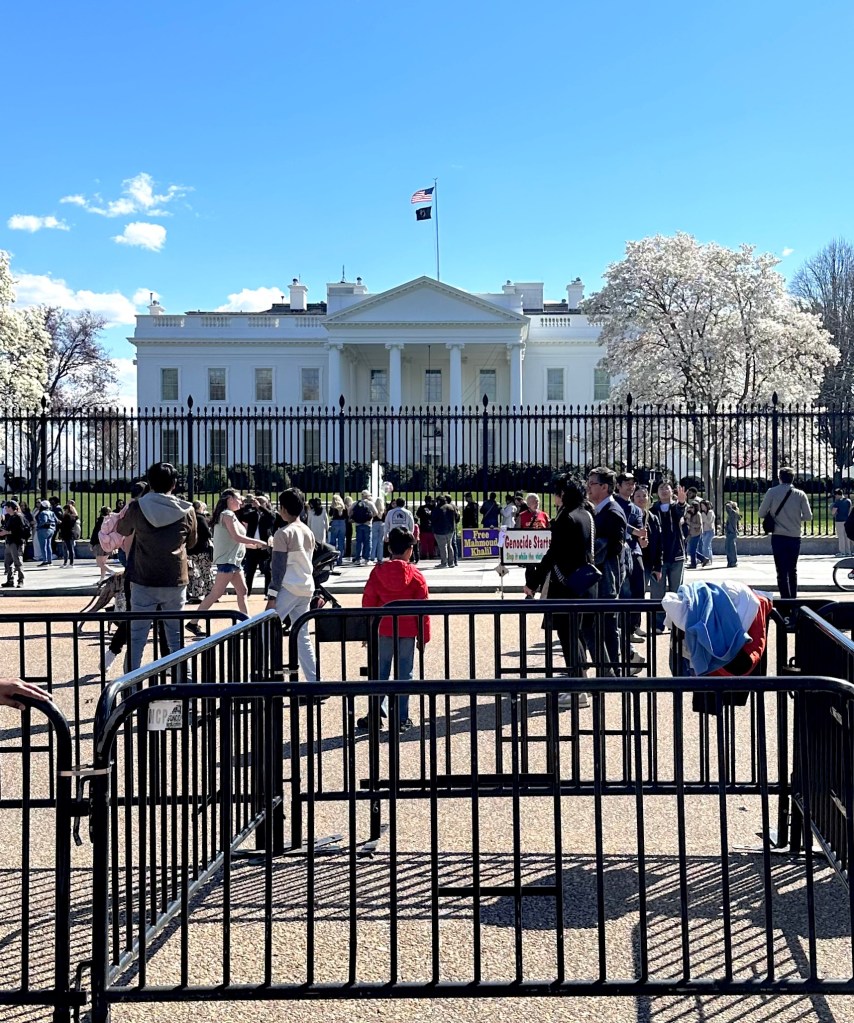
The White House, seen in passing on the way to the Renwick.
Reflecting on these experiences and the disturbing implications of the executive order, I remain convinced that museums must continue as independent, dynamic spaces dedicated to exploring history in its full depth, complexity, and discomfort. Compromising this principle threatens the essence of what makes museums truly democratic and vital to society. I stand with my fellow museum professionals during this uncertain time and remain committed to using my knowledge and skills to advocate for continued progress in this field.
References
Bunch, L., Hayden, C., & Shogan, C. (n.d.). Democracy and Our Shared Heritage Fireside Chat. YouTube. https://www.youtube.com/watch?v=kgGZ5HMxAlc
ICOM. (2023, June 5). Museum definition. International Council of Museums. https://icom.museum/en/resources/standards-guidelines/museum-definition/
Trump, D. J. (2025, March 28). Restoring Truth and Sanity to american history. The White House. https://www.whitehouse.gov/presidential-actions/2025/03/restoring-truth-and-sanity-to-american-history/
Shoenberger, E. (2022, February 23). “What does it mean to decolonize a museumLinks to an external site..” Museum Next.




Leave a comment