

Day six- representation matters
Today we were given the privilege of visiting the National Museum of African American History and Culture before it was open to the public. This is an extremely popular museum so having the space to ourselves was incredibly special. In addition to the gift of private access, we also had the privilege of receiving a tour from Timothy Anne Burnside, the museum’s Curator of Music and the Performing Arts (also a JHU alum).
To be honest, I am still processing the full extent of the work we saw today. The museum is massive and offers an overview of the history of African Americans which spans from the atrocities of slavery to the pride and joy of artistic expression.
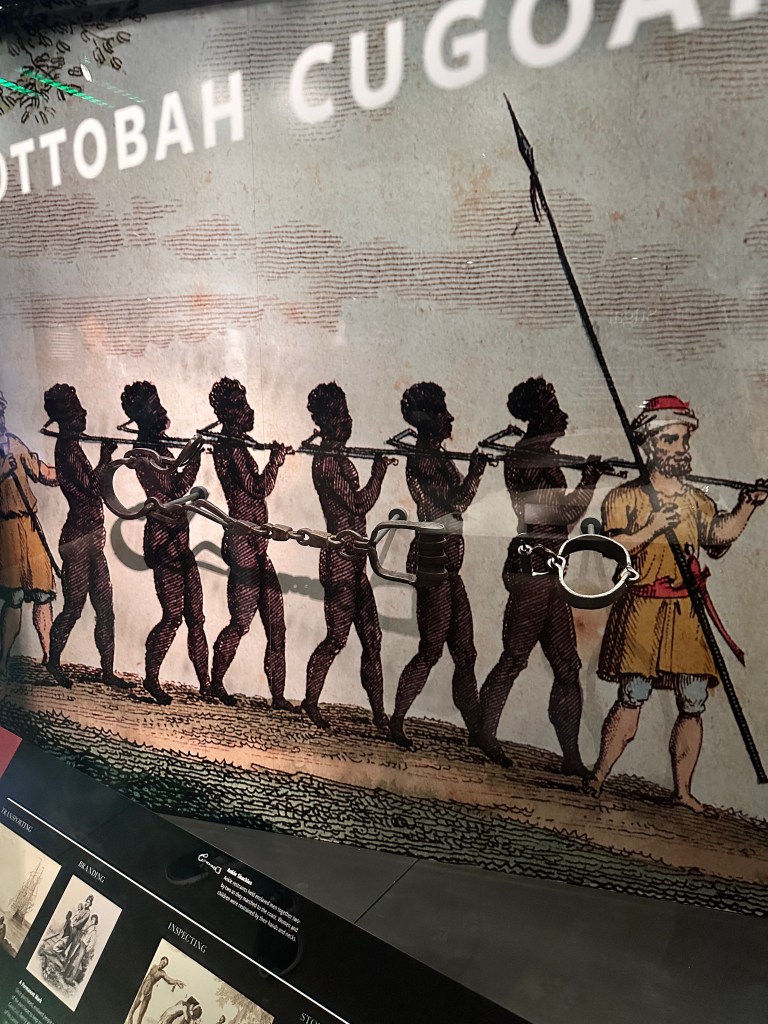
A display from the first gallery which shows the shackles used on enslaved people.
Timothy shared with us how intentional the design of certain galleries were in order to elicit emotional responses and provide empathetic context for the viewer. For example, the design of the first gallery, which discusses the trauma of Africans being captured and forced onto ships, is purposefully cramped and enclosed, making the viewer feel as if they too are being moved through a confined space. This contrasts with the gallery discussing the Revolutionary War, which is much more open, providing the first sense of relief after the initial galleries you move through.
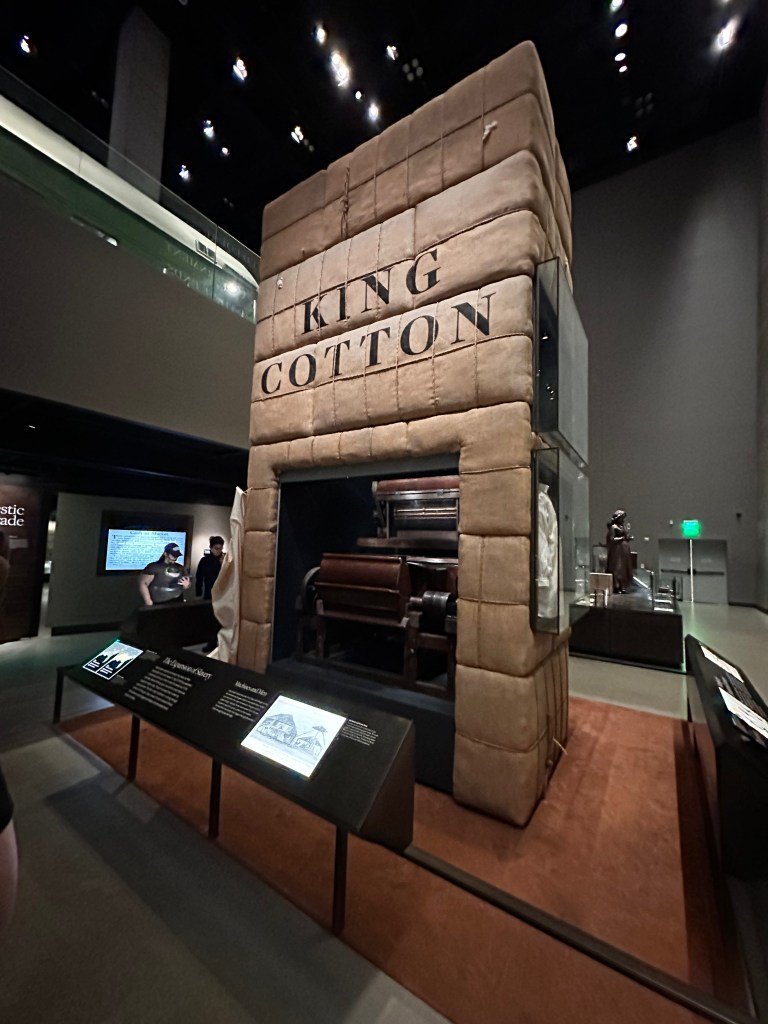
A display from the Revolutionary War era gallery which shows the open concept design.
The content of the lower galleries was heavy. The heartbreaking truths they convey are hard to sit with and naturally evoke strong emotional reactions. In galleries which displayed particularly graphic images, there was a red outline around works that may be unsuitable for children or sensitive viewers.
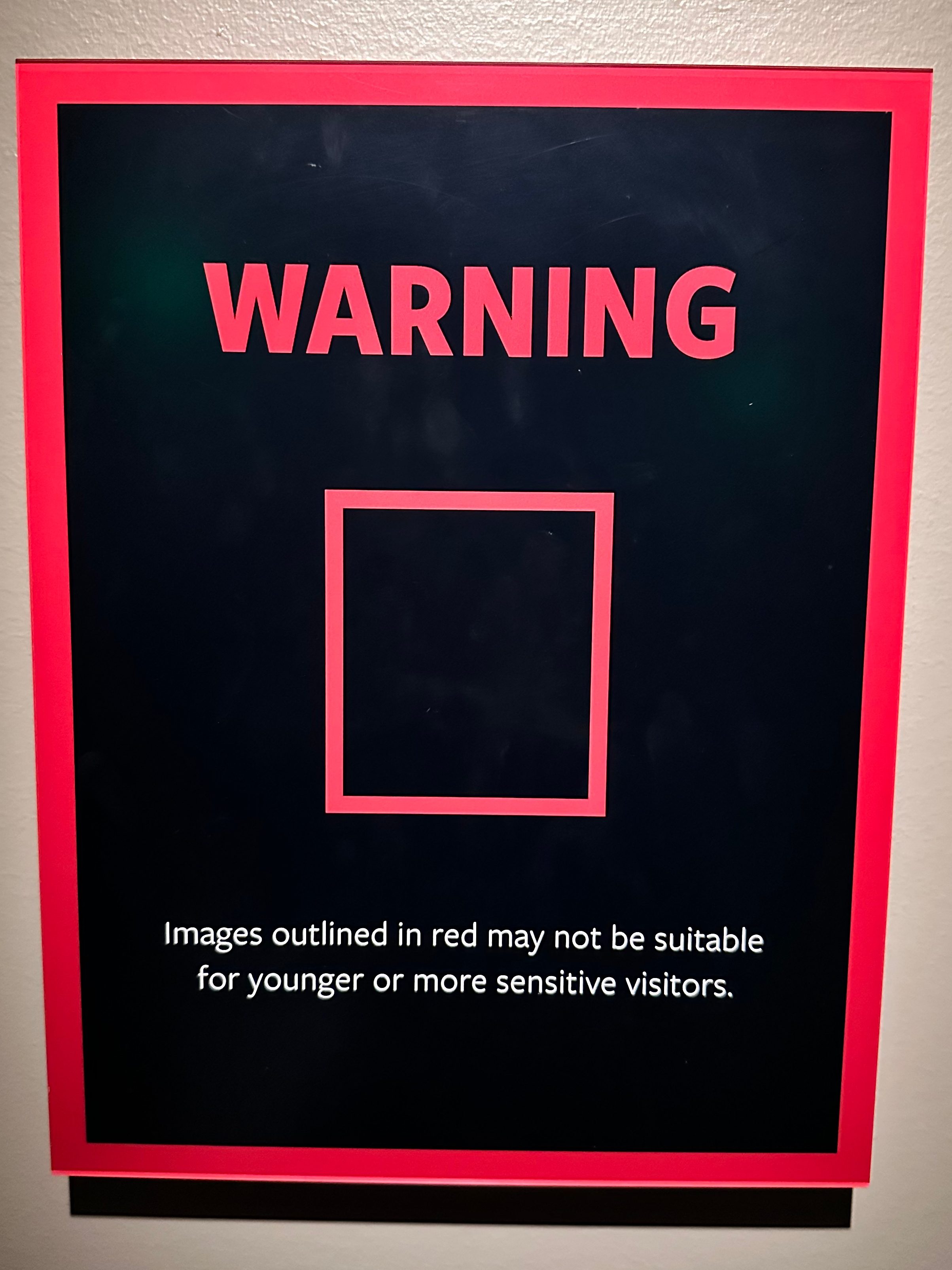
A visual warning
Walking through the galleries, I was reminded of our discussion with Mike Lesperance last week which examined the ways in which we provide context and “make meaning” for objects. For example, the two images below had profound impacts on me, both positive and negative. At first glance, they appear to be a rather plain handkerchief and some sort of sewing materials. It is only through the contextual interpretation provided by exhibit design that their meaning transforms, showing them instead as a symbol of strength (the handkerchief) and relics of unimaginable cruelty (the medical tools).
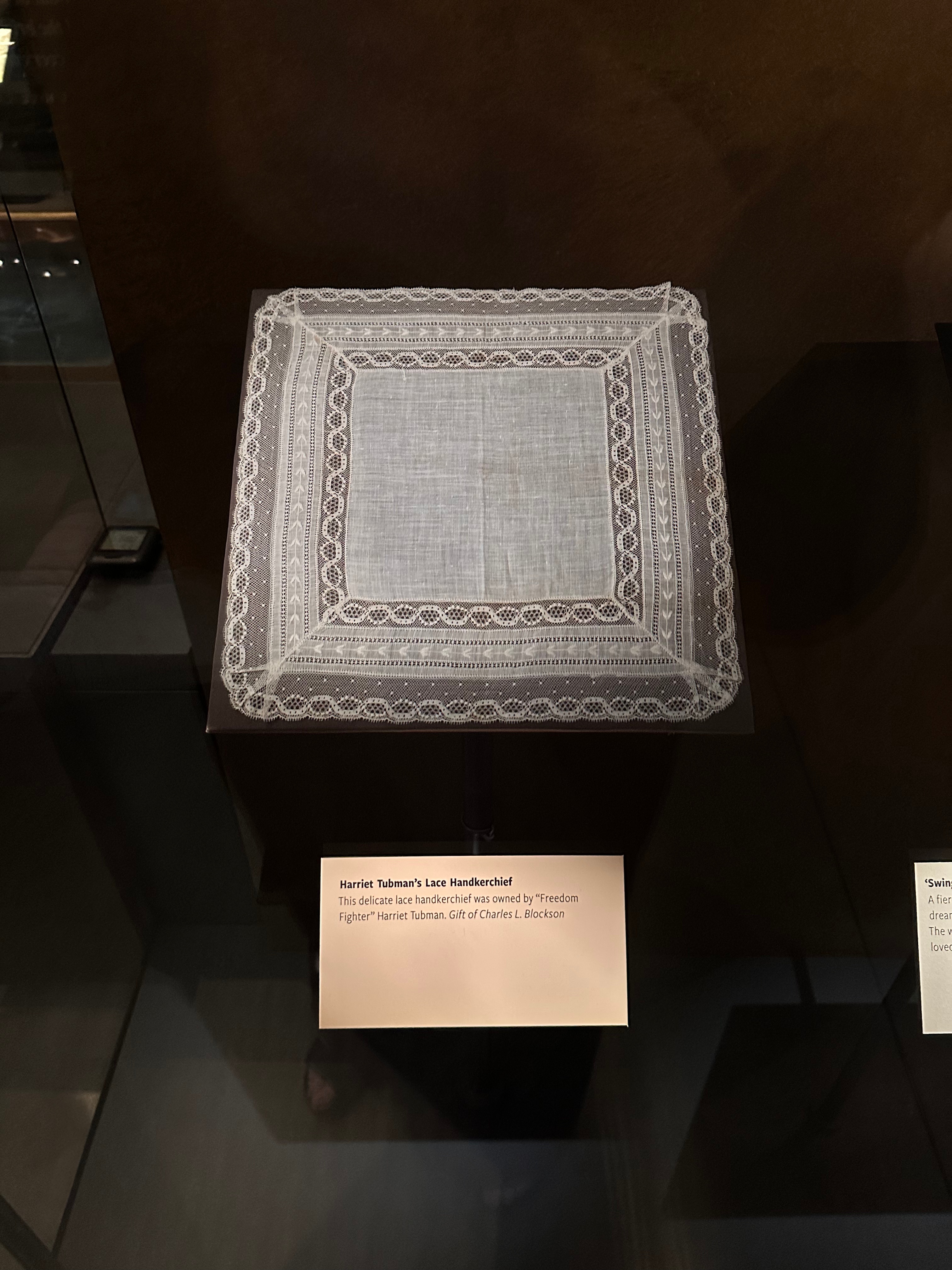
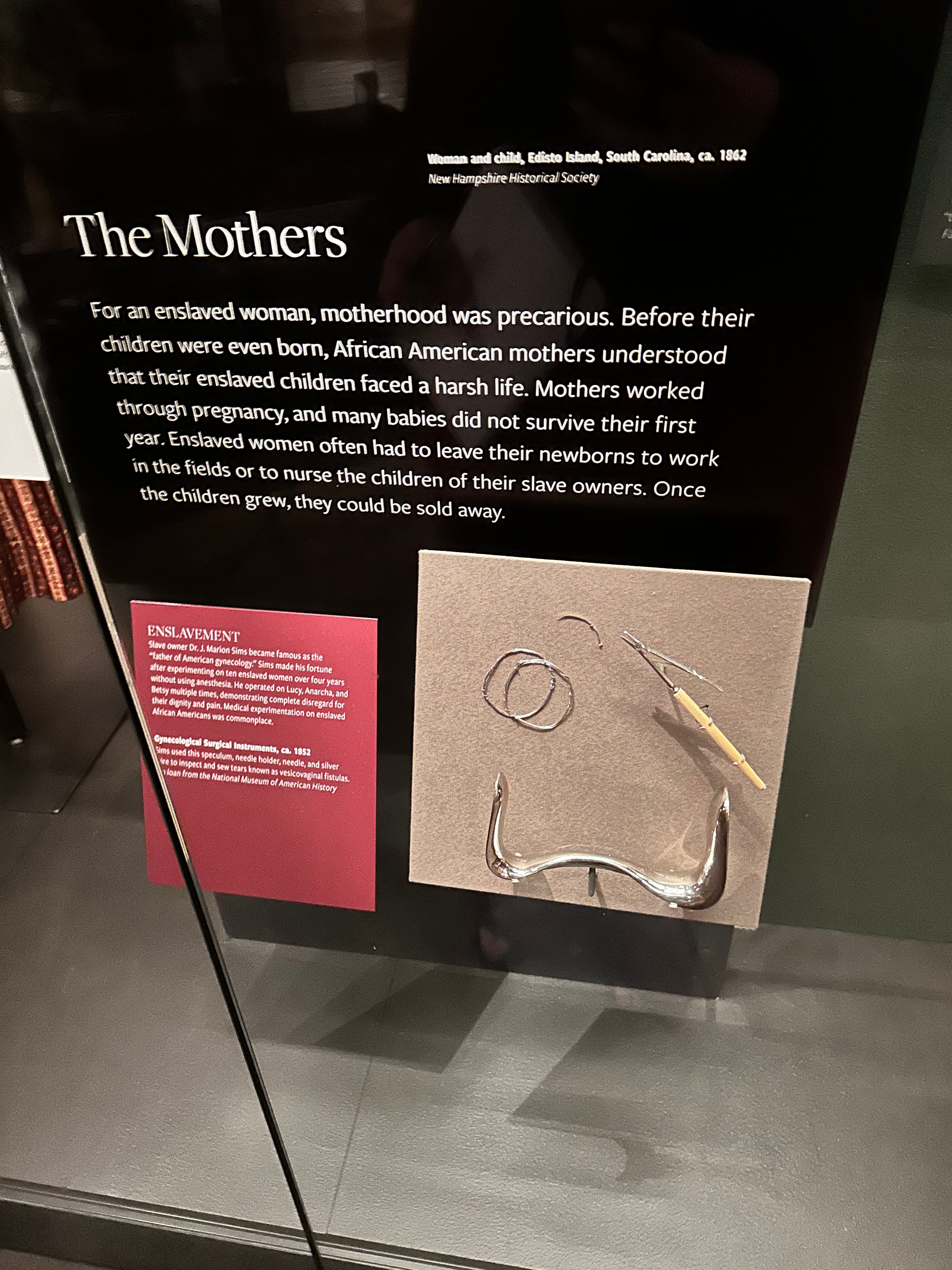
left: Harriet Tubman’s handkerchief, right: the gynecological tools used by slave owner, Dr. J. Marion Sims in his horrifically cruel medical experimentation
After touring the lower galleries, we joined Timothy upstairs for a Q&A. She provided more insight into her career and the breakdown of federal jobs verses contract positions, often funded by trusts. She spoke about the intentionality of her work, especially as a white woman, to use her skills in the museum field to elevate the voices and lived experiences of the Black community. Timothy also shared some reflections on the museum’s wildly popular Block Party and the profound impact it had on their outreach to communities who have not historically felt welcome in museums. It was a powerful reminder of why programming matters and made me excited to get back to work!
Here are a few of my favorite objects from the fourth floor:
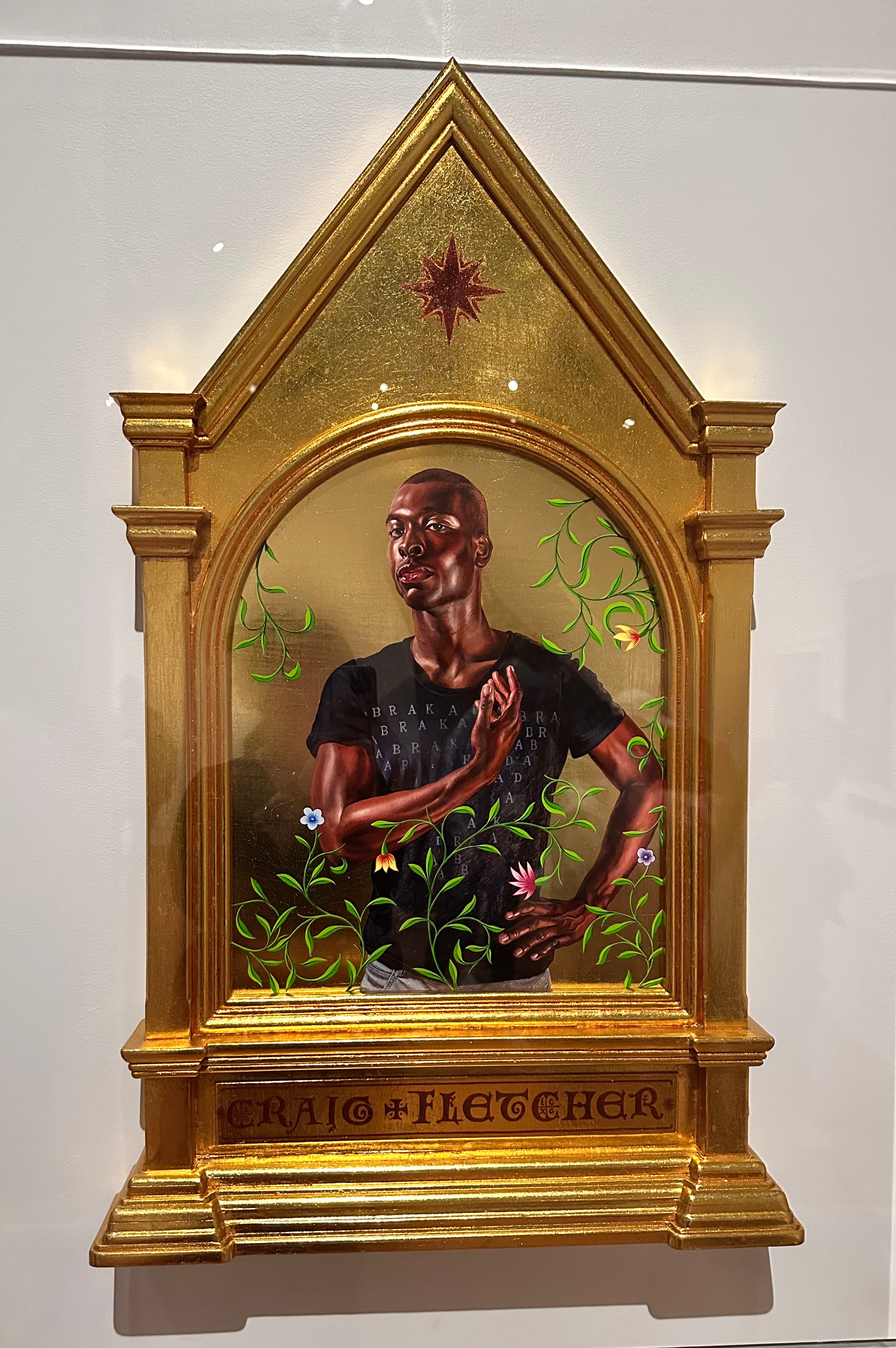
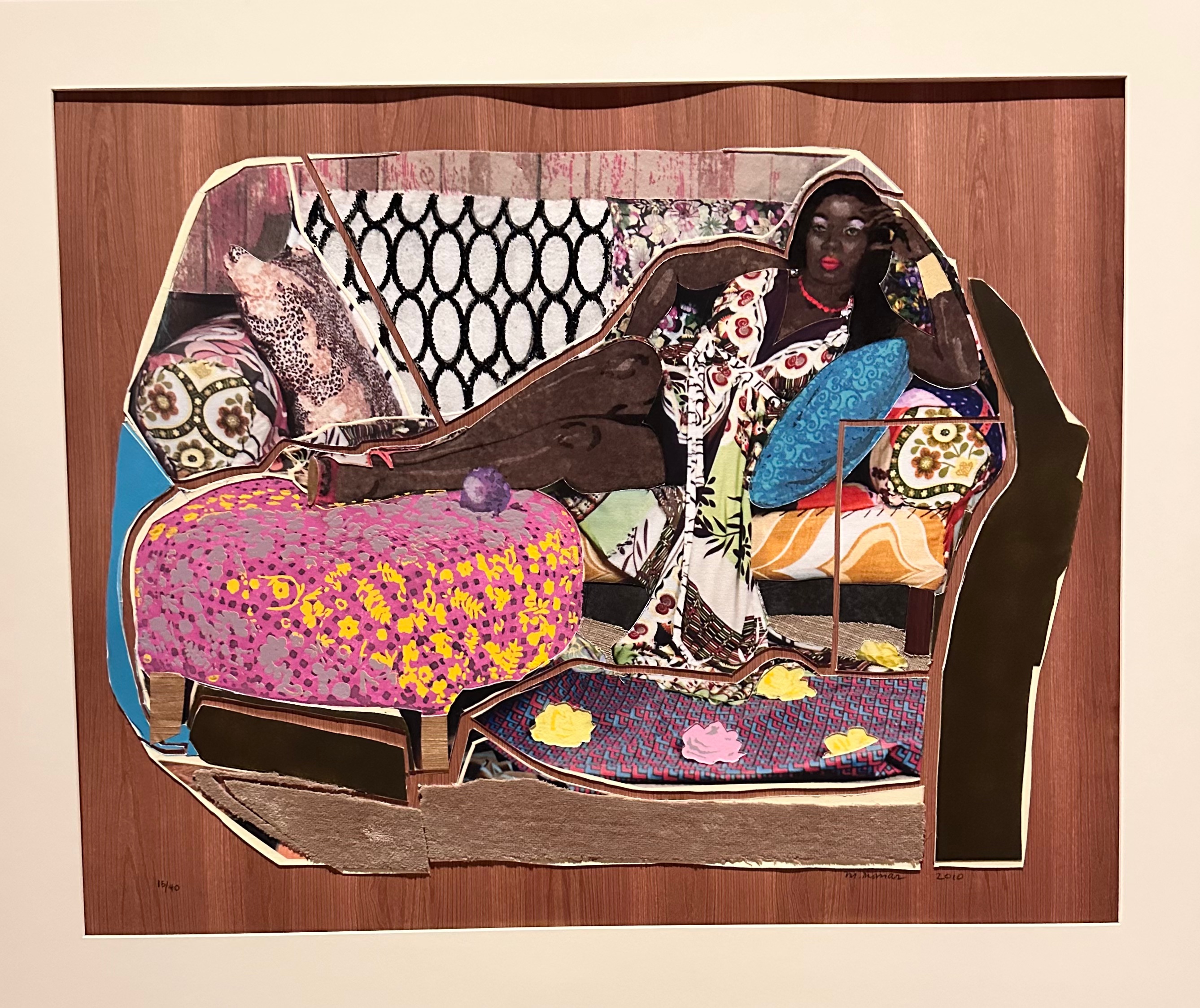
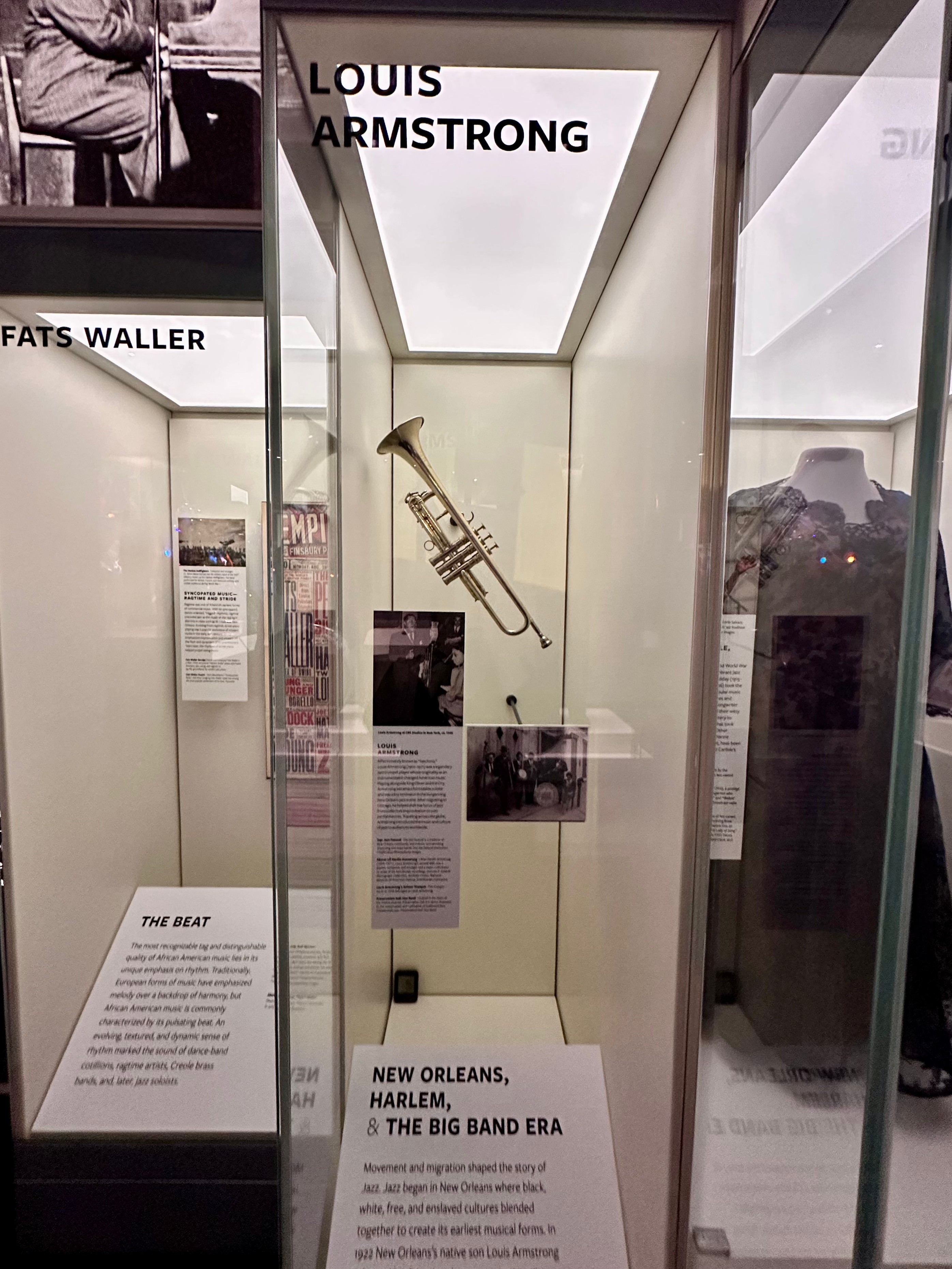
left: Saint John The Baptist by Kehinde Wiley, 2014 center: You’re Gonna Give Me The Love I Need by Mickalene Thomas, 2010 right: Louis Armstrong’s trumpet
In the afternoon, we visited the Irene and Richard Frary Gallery in the Johns Hopkins Bloomberg Center and spoke to Caitlin Berry. This gallery was in stark contrast to the size of NAAHM. Caitlin shared insights into the challenges of working in such a small space, but also spoke about the exciting opportunity to develop a new resource for the community and Hopkins students.
The afternoon was spent working on our group projects and after lots of productive brainstorming, I think the Chili Bowls are in a good place!
The day ended with a Happy Hour with peers, professors, and JHU alums in the area. Happy St. Patricks day!




Leave a Reply