
Reflections from week one
This past week has been marked by an overwhelming mix of emotional, physical, and intellectual demands, but it has also offered invaluable insights into how museums (and I) operate under stress. At each site, we have experienced unease among museum professionals about the precarious future of our work, especially in light of Trump-era policies. Diminishing support for cultural institutions, restrictive immigration measures that undermine diverse perspectives, and a broader political climate of denial all challenge the foundational goals of museums.
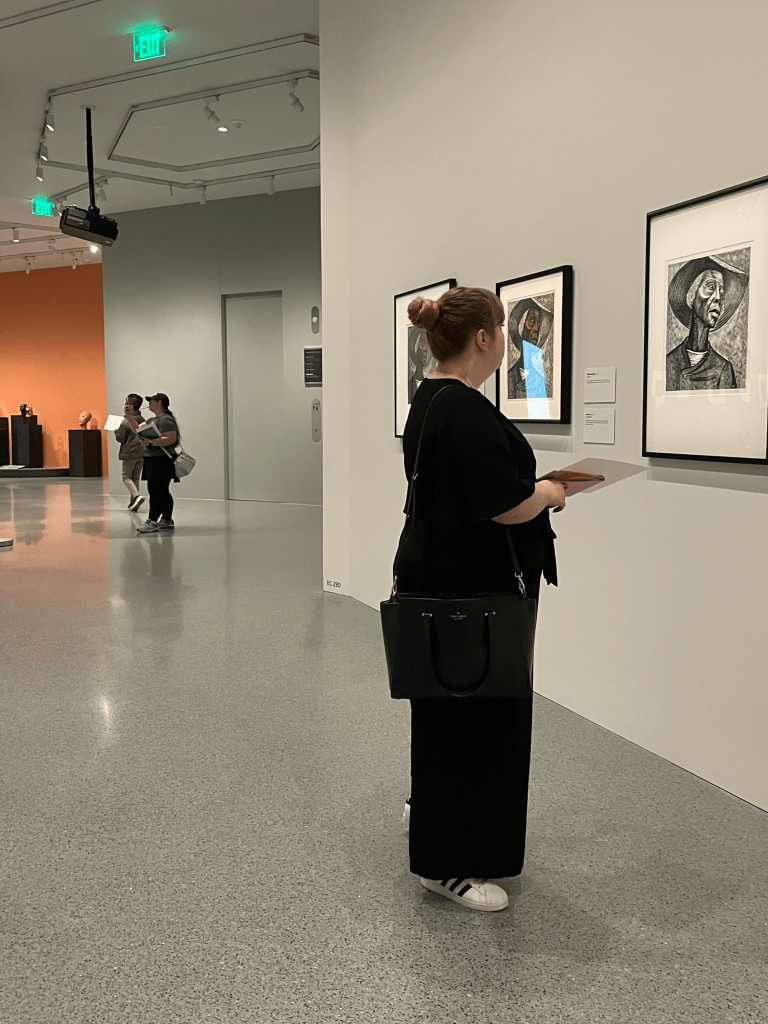
Viewing Sharecropper by Elizabeth Catlett
The International Council of Museums published their new museum definition about a week before my first semester of the JHU program. The definition is as follows: “A museum is a not-for-profit, permanent institution in the service of society that researches, collects, conserves, interprets and exhibits tangible and intangible heritage. Open to the public, accessible and inclusive, museums foster diversity and sustainability. They operate and communicate ethically, professionally and with the participation of communities, offering varied experiences for education, enjoyment, reflection and knowledge sharing” (ICOM, 2022). This definition has gone on to influence every class I have taken. It sets the professional standard for every museum in the world, so what do we do when our government does not support these values?
The class that has come to mind most frequently this week is Museums, Race and Inclusion taught by Dr. Redell Hearn.Early on in the course, we were assigned an article by author and historian, Ibram X. Kendi entitled “Denial Is the Heartbeat of America,” which discussed how readily Americans distance themselves from difficult truths, insisting that acts of violence, injustice, or upheaval is “not who we are” (Kendi, 2021). Such denial can manifest in museums as reluctance to acknowledge systemic inequities within the stories we choose to tell and the objects we display.
Erasure of the truth does not exempt us from its consequences, and it is our responsibility as the keepers of collective culture to hold a mirror to our nation in times of identity crisis. I saw evidence of this in the Homewood Museum’s commitment to transparency, Lincoln’s Cottage’s approach to viewing our history with honesty and compassion and the National Gallery of Art’s commitment to artistic integrity in the face of extreme pressure from Trump’s administration. I also observed the frustration of some of my peers when hearing about changes made to the PR for the National Gallery’s Elizabeth Catlett exhibit and while I understand their perspective, I know first-hand how difficult it is to present an exhibit that you know will anger a conservative base. I see no issue with measured self-preservation as long as it does not censor artists or result in the loss of diverse voices in exhibits.
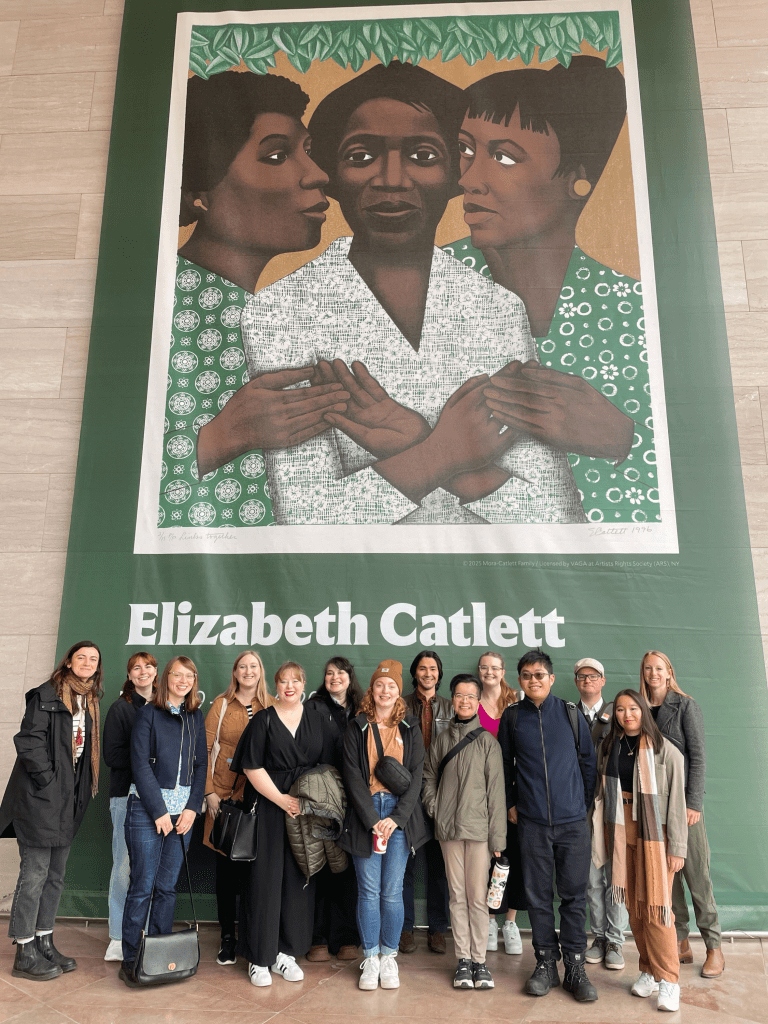
The team at the National Gallery of Art
Despite the anxiety I’ve encountered in each institution, I’ve also witnessed creativity, hope, and perseverance. A line in another reading from Dr. Hearn’s class that has often returned to mind this week is, “a profession in crisis is a profession in evolution” (Bryant-Greenwell, 2019). Conversations with curators, conservators, and educators often circled back to this sense of necessary evolution. It’s not just about preserving artifacts or historic homes; it’s about reckoning honestly with history and ensuring that museums remain inclusive, empathetic spaces.
Another theme present at each site was the challenge of providing visitors what they want (even if they can’t seem to tell you themselves). This reminded me of John Falk’s article, The Visitor, first introduced to me through an Introduction to Education class. Click here to view the article.
In “normal” times, museums skillfully balance these differing expectations, offering varied programs and interpretive strategies to meet visitors where they are. Yet in times of crisis—whether it’s political turmoil, funding threats, or a global pandemic—those visitor needs can intensify. Explorers may crave thoughtful engagement with current social issues. Facilitators may look for safe, welcoming spaces for family learning. Experience Seekers may seek uplifting cultural events that temporarily relieve the stress of everyday life. Hobbyists will rely on curated collections to deepen their expertise, and Rechargers will turn to museums for the solace and calm they cannot find elsewhere.
These architypes make up a microcosm of the Nation’s broader struggle between denial and revelation that Kendi describes. In a time marked by upheaval and uncertainty, museums must embrace their calling to serve all members of their communities. They must show us all that a profession—and indeed a nation—in crisis can still evolve toward a more inclusive, empathetic, and truthful future.
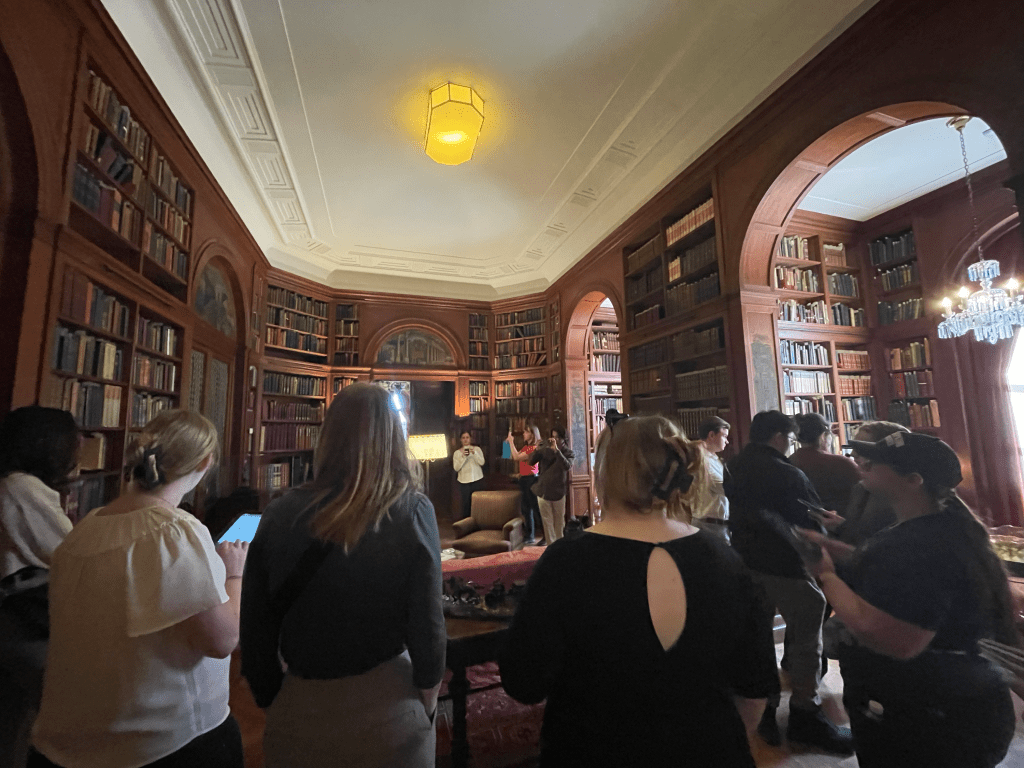
Evergreen Museum & Library
References
Bryant-Greenwell, K. (2021, October 13). Taking a stand against neutrality: The role of Social Justice in museums. museum-id. https://museum-id.com/taking-a-stand-against-neutrality-the-role-of-social-justice-in-the-21st-century-museum/
Falk, J. H. (2023, December 18). Understanding Museum Visitors’ Motivations and Learning. Institute for Learning Innovation. https://www.instituteforlearninginnovation.org/person/john-h-falk-ph-d/
Kendi, I. X. (2023, October 30). Denial is the heartbeat of America. The Atlantic. https://www.theatlantic.com/ideas/archive/2021/01/denial-heartbeat-america/617631/
Museum definition. International Council of Museums. (2023, June 5). https://icom.museum/en/resources/standards-guidelines/museum-definition/




Leave a comment