
Day eight- feeling to think, thinking to feel
I have been looking forward to our visit to the National Museum of the American Indian since I got to D.C. We had the privilege of meeting with Ryan Dodge, the Associate Director for Digital Strategy and Engagement (and JHU alum) and Dennis Zotigh (Kiowa/Ohkay Owingeh Pueblo/Isante Dakota Indian), Cultural Specialist and Writer.

The exterior of the National Museum of the American Indian
The discussions we had with the two men were both important, but markedly different in focus. Ryan represents the skill and knowledge of a trained museum practitioner, and Dennis represents the cultural memory and lived experience vital to the mission of the museum.
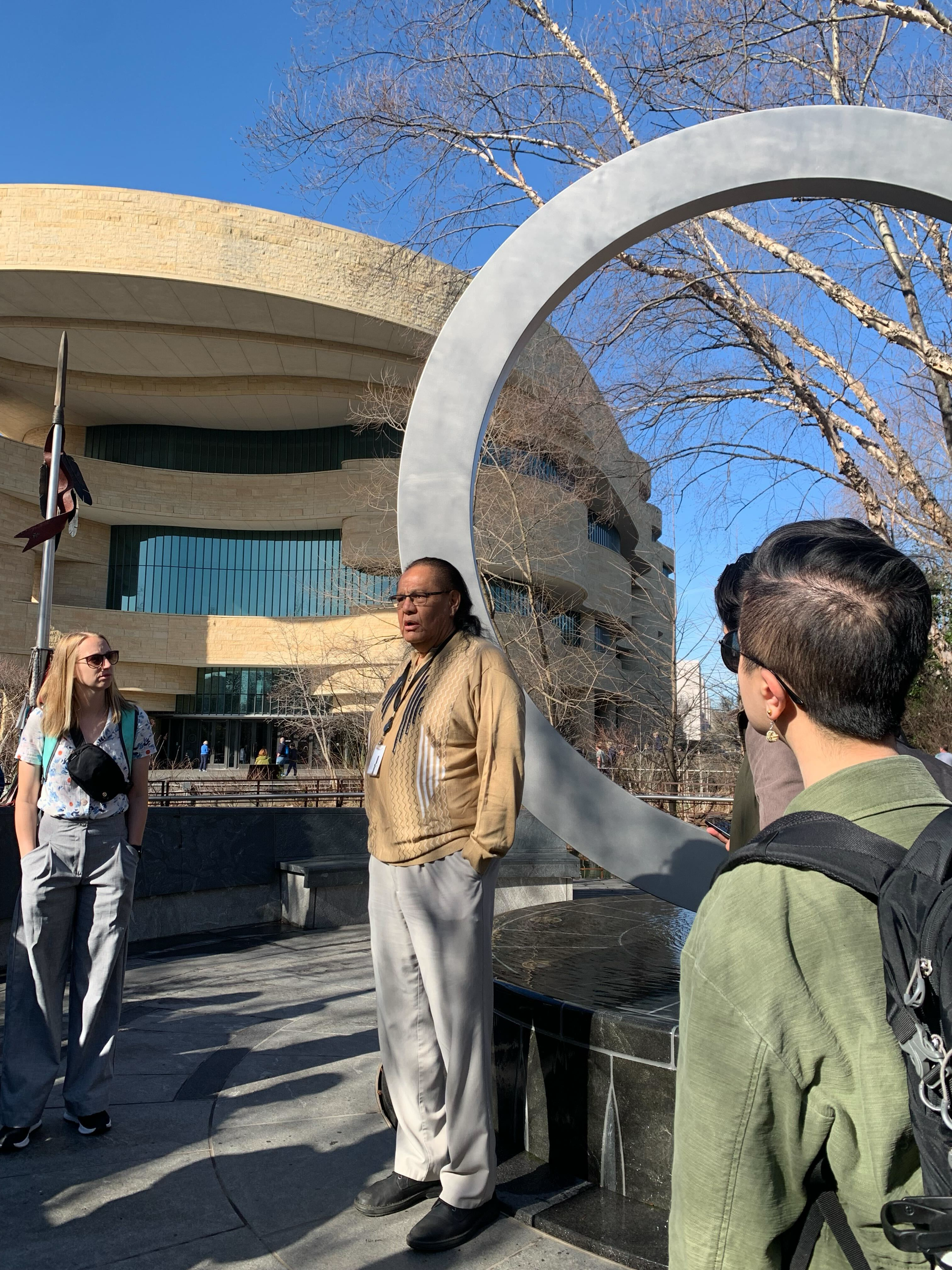
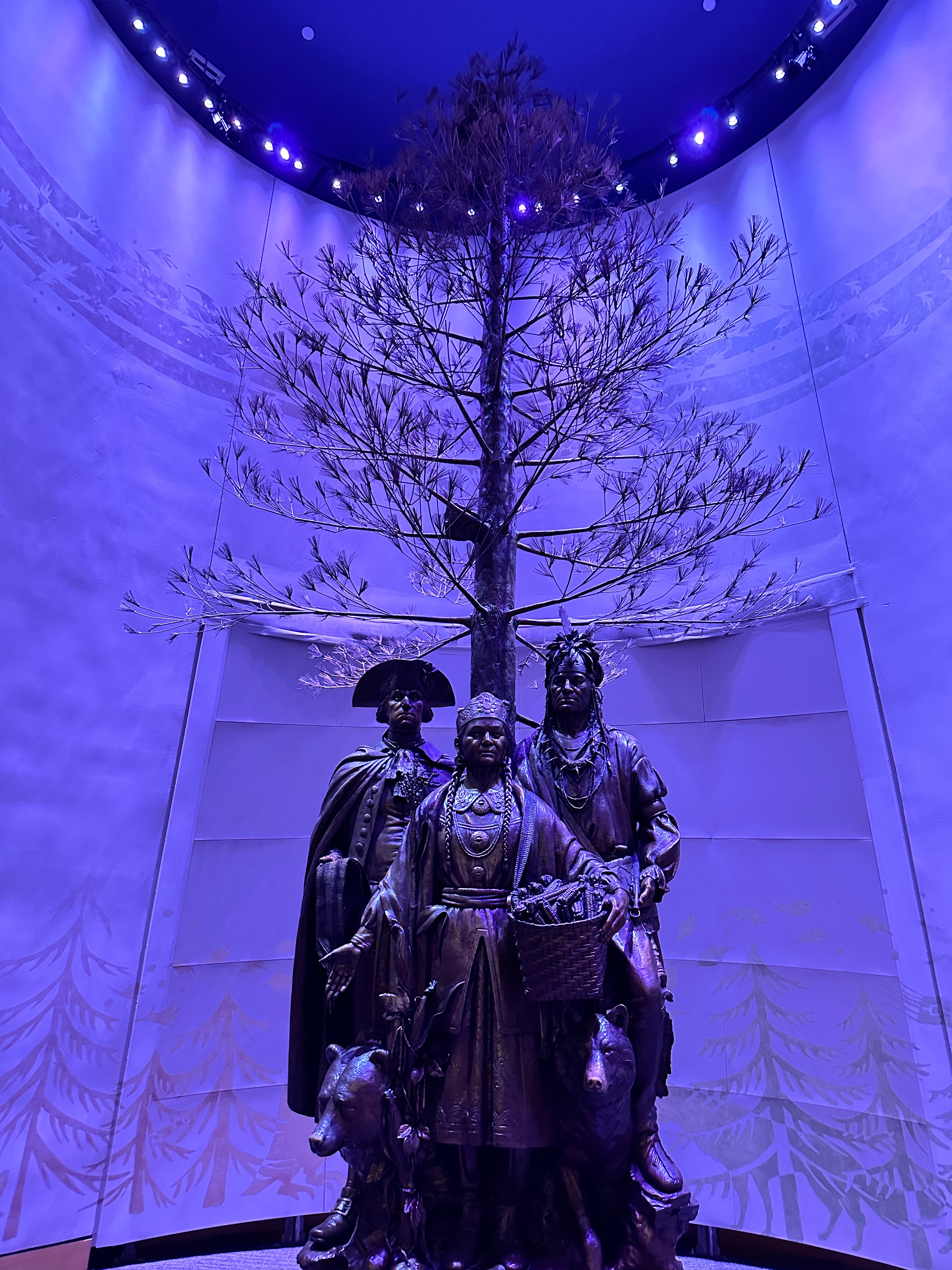


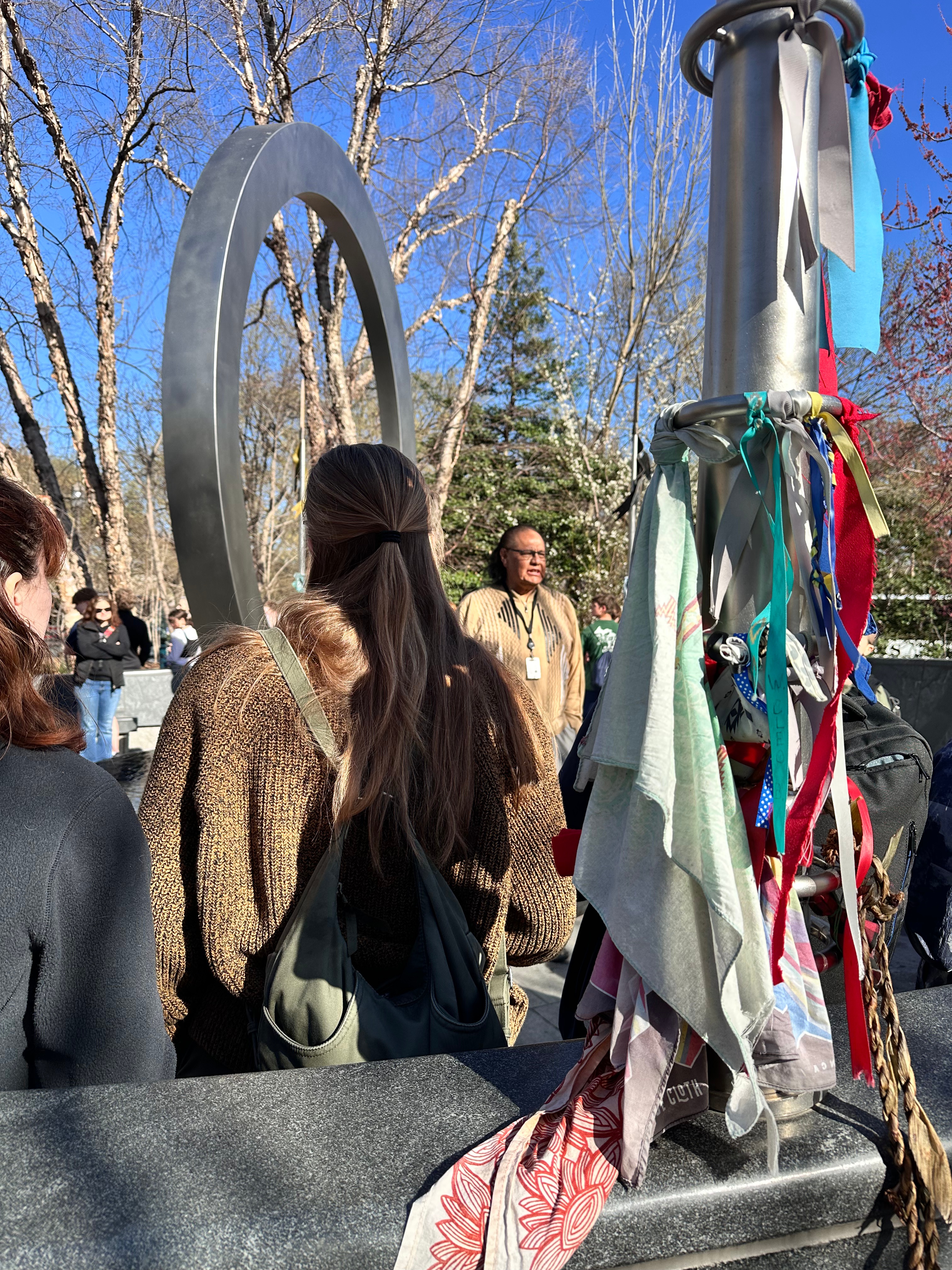

Top row from left to right: Dennis speaking to the group before our tour, “Allies in War, Partners in Peace” by Edward Hlavka, Man’s shirt (back), Upper Missouri region, circa 1840, prisms casting rainbows in the main hall. Bottom row from left to right: Dennis speaking to us, “Nation to Nation: Treaties Between the United States and American Indian Nations.”
Indigenous voices in museums spaces have historically been silenced and the amount of native objects that have made their way into collections through blatant theft is staggering. This history of misrepresentation and theft has created understandable distrust of museums for many indigenous communities. This is exactly why the work being done at this museum is vital. The NMA amplifies indigenous voices, allowing members of the native community to tell their own stories and display objects in an informed and respectful way.
The tour we received from Dennis was unlike any other experience I have had in a museum space. He was able to contextualize the galleries with his wealth of knowledge, but also through his lived experience. I have more notes from his tour than from any other site and I treasure the stories he shared as I plan to use what I learned to better my own teaching practice. The emotion I felt in the galleries translated to a stronger memory of the experience which in turn, helps me remember the information more easily.

The JHU crew with Ryan Dodge enjoying NMAI’s spectacular view
Our conversation with Ryan provided fascinating insight into an aspect of museums that I am not as familiar with- digital infrastructure and analytics. When I imagine IT related work, I often picture dry, excel-type data, but the way Ryan described his work brought the possibilities of digital innovation to life. He stressed that digital transformation is about people. His work can help bring cultural representation to communities that may not otherwise be able to experience the museum. This approach to serving your audience is not only innovative, it is compassionate- the best combination in my opinion!
In the afternoon, we took a trip to the National Air and Space Museum for a talk with Shannon Baldioli and a quick visit to the cosmos. I enjoyed the exhibitions, but I loved Shannon’s approach to educational professional development and object based learning. As Shannon says, “big questions, lead to big learning,” and we started with a whopper of a question: should we explore space?
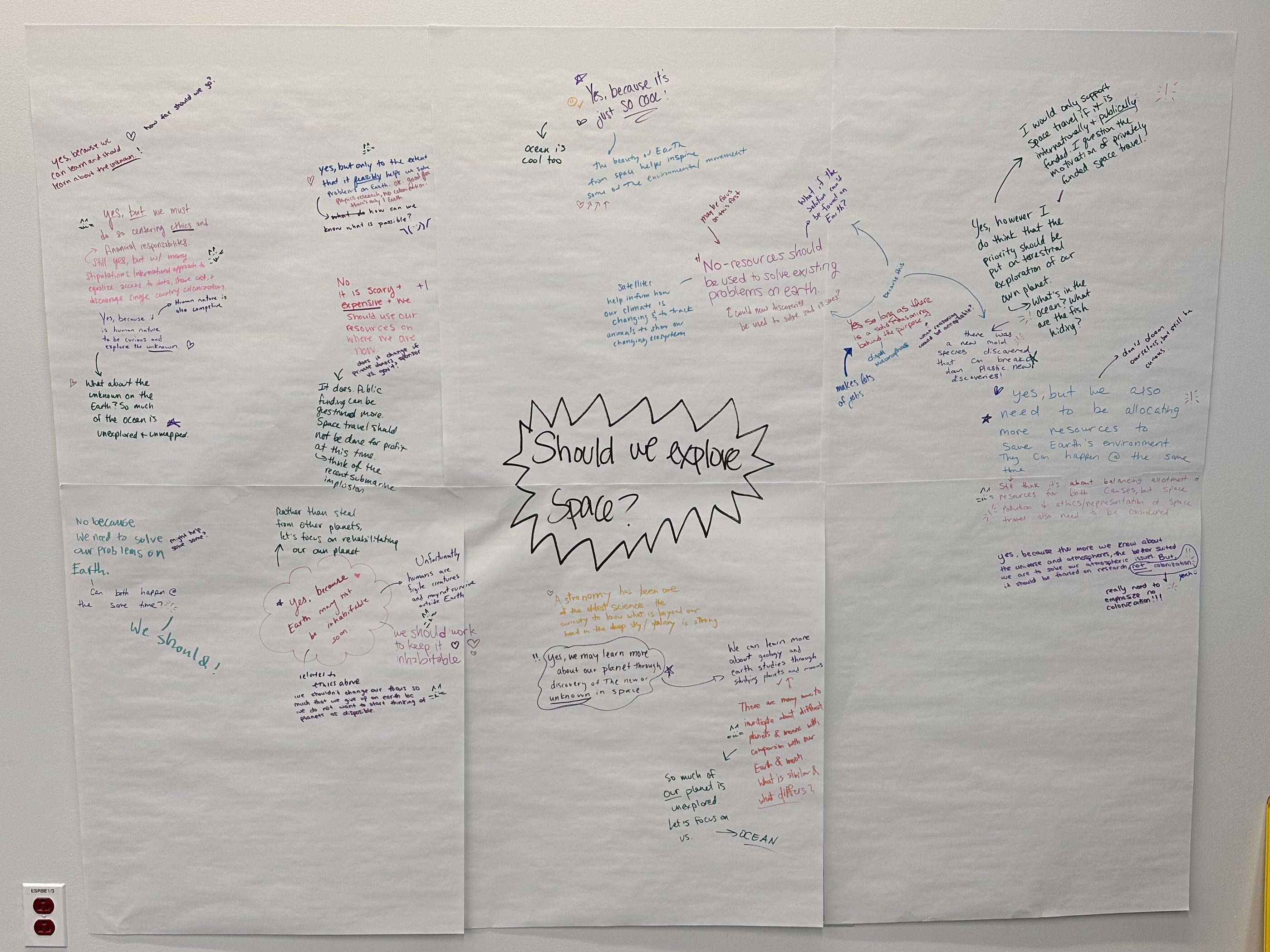
Our Chalk Talk debate
We were encouraged to come up with an initial response and write it on the wall. We were then given time to explore the galleries and find evidence that supported our stance, or, we could change our answer after learning more information. I’ll be honest, I’m an art girl. Space exploration is interesting, but I categorize it in my head somewhere close to the IT assumptions that Ryan had just disproved. It was not until I had a chance to explore the exhibits and talk with my classmates about the varied impact space travel can have on our everyday lives that I started to find more of an emotional connection to the topic. Just like at NMAI, once I can feel, I can remember.


Galleries in the National Air and Space Museum
The overarching theme for me today was the power of object based learning and the importance of emotion in the learning process. Both museums take tremendous care to serve their visitors, but do not shy away from difficult conversations. Talking about tragedies such as the history of Native American boarding schools or the Challenger Disaster is hard. Watching excited faces fall and collective grief settle on a tour group can feel scary. Have I just ruined their experience? What if this makes them never want to come back? It is our job as educators to guide our students through critical thinking, but it is just as important to help them navigate complex emotions.
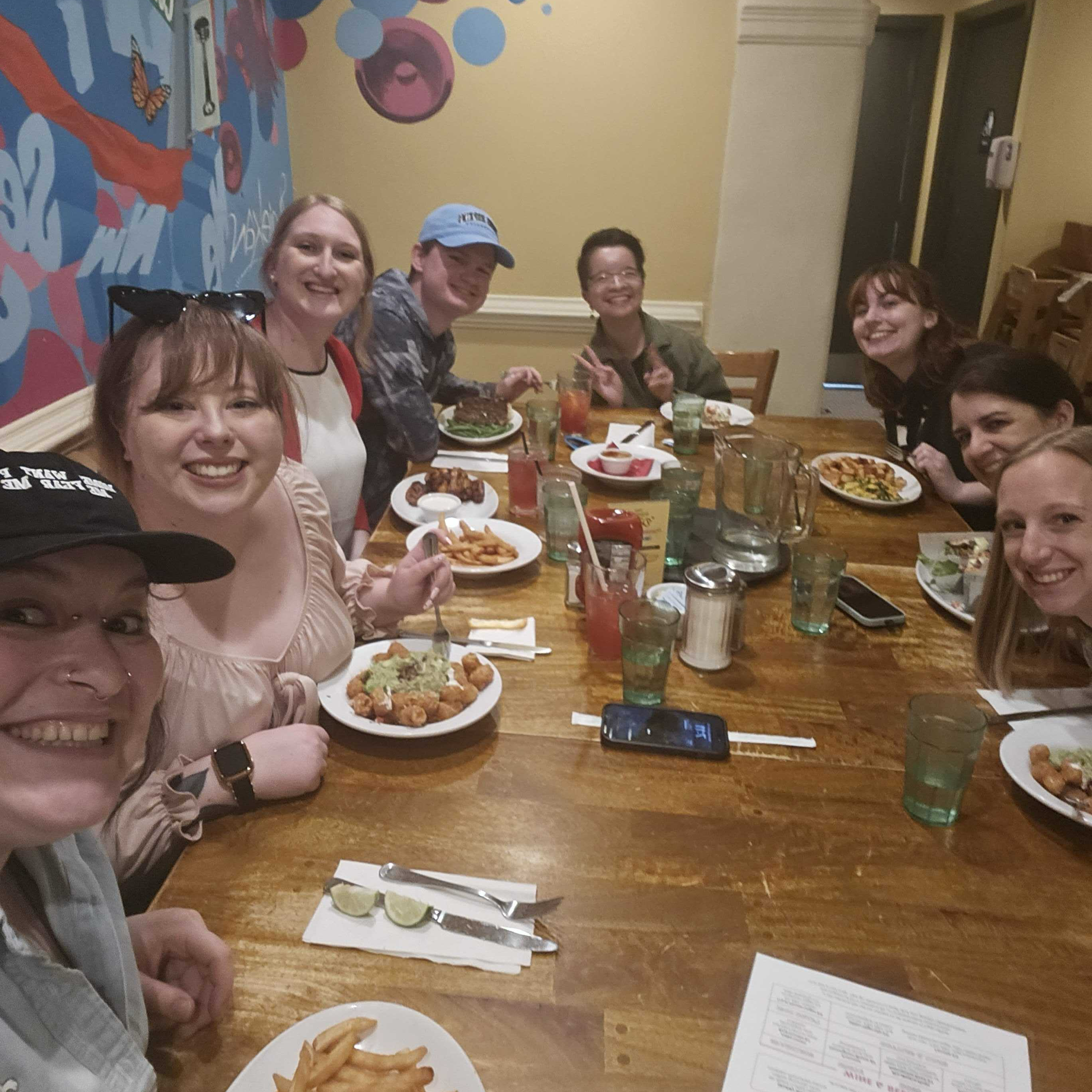
A gaggle of museum dorks in public
I ended the day with some of my peers enjoying happy hour snacks at a local diner. Being with people who are the same brand of weird as you is a gift.



Leave a comment