

Day seven- the future is bright, the past is unclassified
We started the day at 555 which gave me the opportunity to grab a coffee and holy moly does a caffeine make difference! After chugging my morning latte, we made our way as a group out to Phillips@THEARC where we had the opportunity to speak with Laylaa Randera, the Manager of Community Engagement and Abby Martin, the Education Coordinator. The ARC is unlike anything I have ever seen in terms of museum programming. They are a part of the largest cohort of social service nonprofits in the country which allows them to offer community resources that are far and above what the average museum outreach is able to achieve.
Layla explained that the ARC makes a point to work with the community in order to create the type of programming that they would like. This gives those they serve a sense of agency and allows the ARC to play a supportive role in the conceptualization and activation of programming.
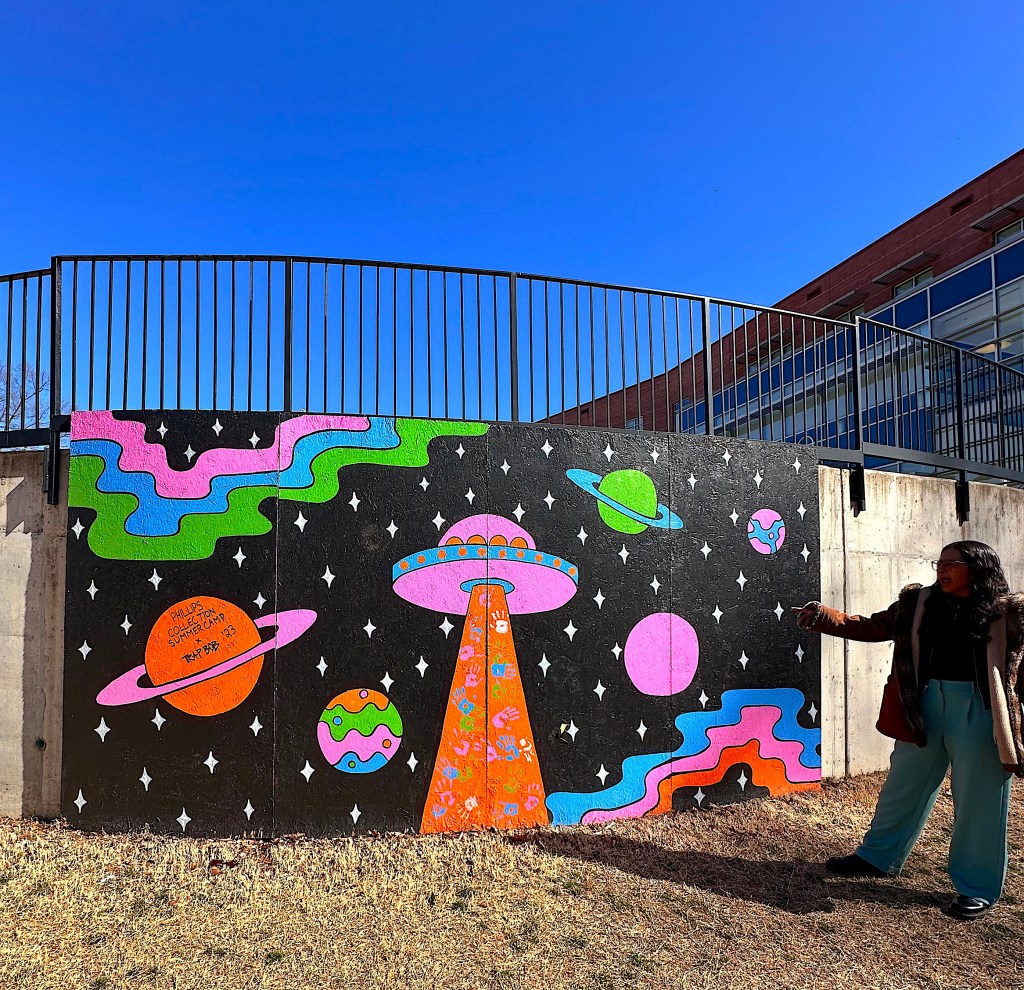
A fun mural that was created by a local artist and summer camp kiddos
We got the chance to tour the ARC’s facility and grounds to observe the wide variety of programming they are able to offer. This encompasses everything from crochet club to an onsite garden that provides the community with fresh produce. My mind is still spinning with ideas of how to implement the concepts and ideals present at this incredible organization at the Carter when I get home!

An interactive art piece that was created by tracing students’ silhouettes and utilizing color to complete an abstraction of their collaboration.
The afternoon explored a much different vibe…
*cue James Bond soundtrack here*
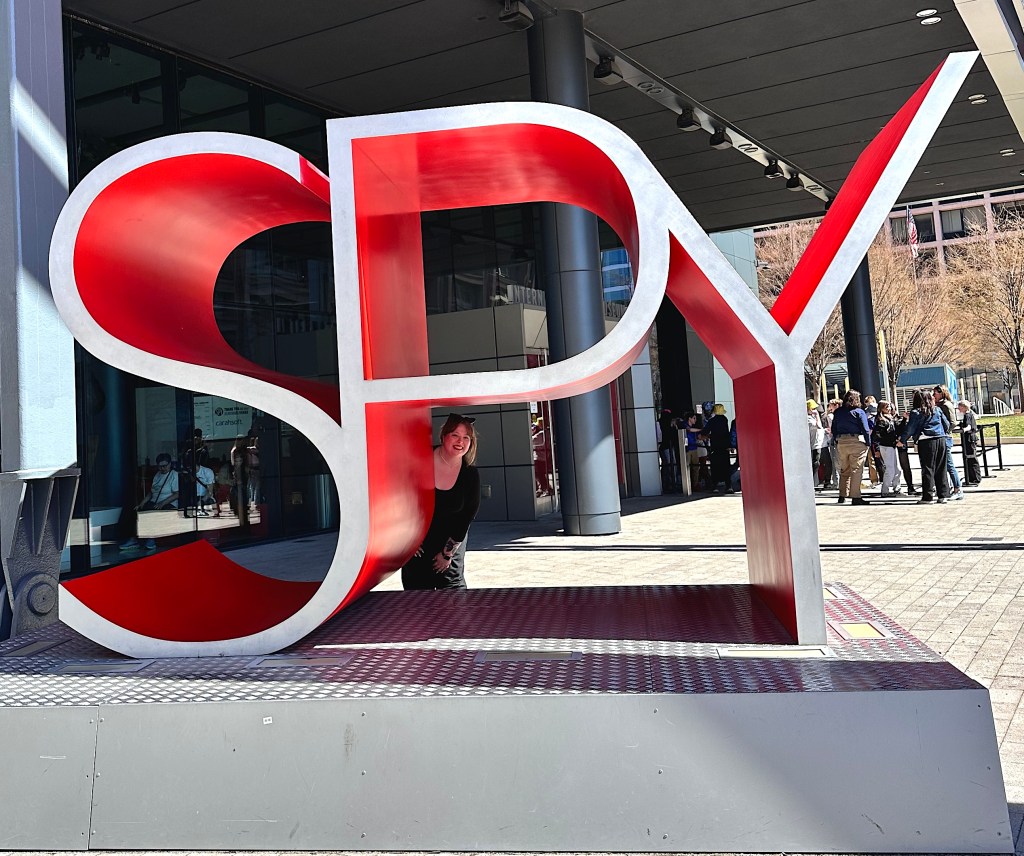
Eye spy a museum nerd
At the International Spy Museum, we entered the secretive world of espionage. Thankfully the operatives we met with were not confined by classified secrets and generously shared insights about the challenges of a museum that juggles a large number of interactive interpretation stations and subjects that can be emotionally charged. Lucy Stirn served as mission control for our covert tour and provided us with all the assistance we needed to successfully gather intel. Lucy was very transparent with the challenges of moving buildings and the growing pains associated with starting over in a new space. As she took us through the galleries, she provided an overview of the ways in which each has changed since the time of opening to better accommodate the space and visitor experience. She shared insights about the work that the museum has done in response to visitor feedback and the areas in which she felt they still had room for improvement.


Additional signage added in response to visitor feedback
Lucy voiced concerns about the museum’s limited capacity to offer more accessible options in the galleries such as seating and scaled back sensory input (although she did share that the museum offers adaptive tools such as noise canceling headphones). She also communicated that the design of the galleries was found to be overwhelming for many visitors and often led to museum fatigue around the half way point of the overall experience. This led to the introduction of way finding arrows with a completion percentage to better communicate to the visitor where they are. After the tour, we had the chance to ask more questions about their institutional structure. I found their journey from a for-profit model to a non-profit one fascinating as it is the only of its kind that I am aware of. The changes that the museum has been able to execute within just a few years is wild to me and speaks to the hard work and dedication of their staff!
Both organizations we spoke with today take visitor feedback very seriously and provide excellent examples of how museums are a constant work in progress. We are never “done” in terms of serving the public and the best way we can do so is to listen. Museums are at their best when they are collaborative and open to change.




Leave a comment